ServicesSiding Installation
Siding Installation in Norris, SC
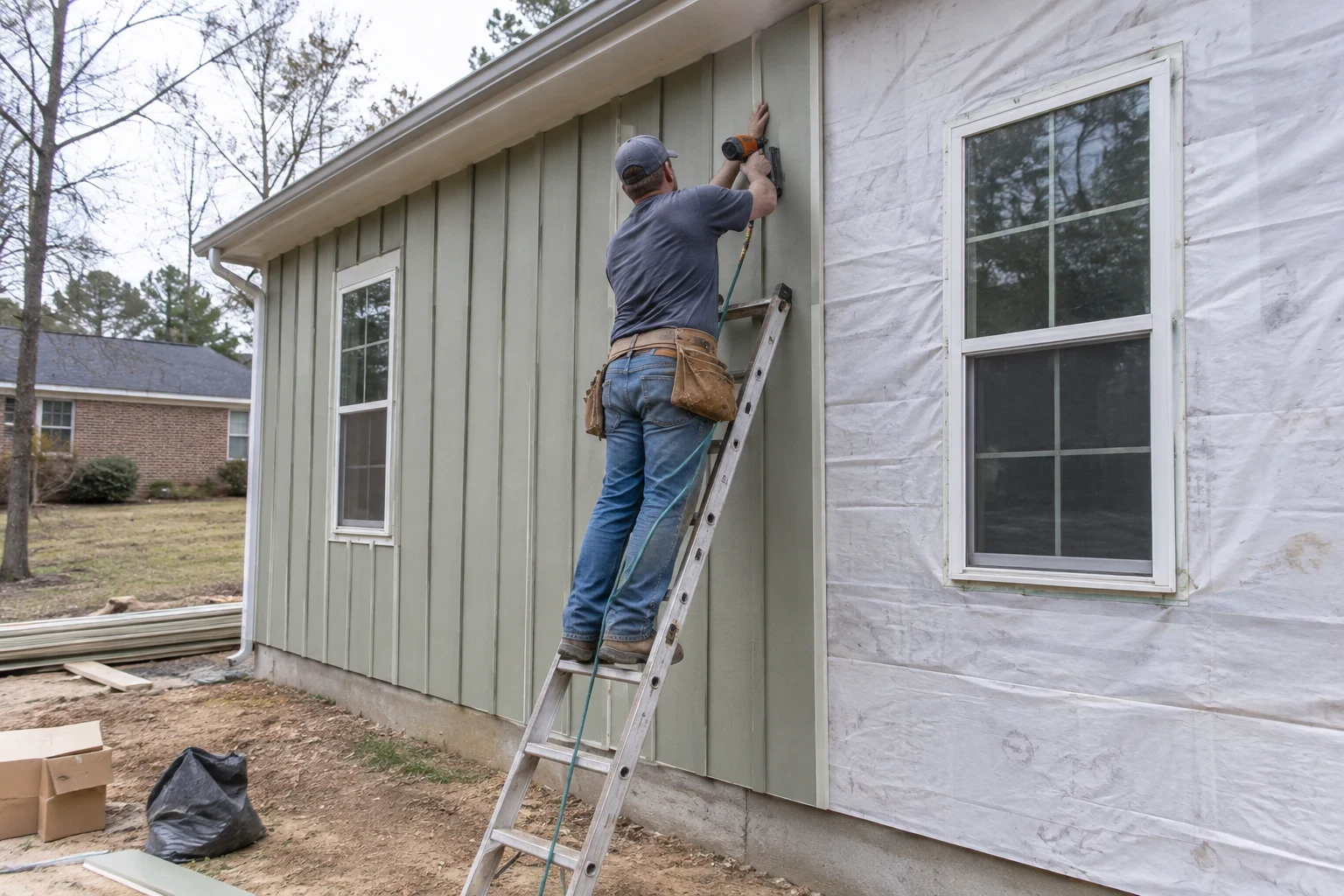
Siding only works as well as the wall behind it. We strip the old cladding, repair soft sheathing, wrap and flash every opening, then install vinyl, fiber cement or engineered wood with the gaps and fastening each product needs to last.
What New Siding Should Actually Fix
Most people call us because the siding looks tired: faded vinyl, cracked boards, paint that will not stay put. The bigger issue is usually hidden. Water gets in at a window head with no flashing or a roof-to-wall joint with no kickout, and it wicks into the OSB sheathing until the panel goes soft. New siding nailed over that wall hides the problem for a few years and then fails from the inside.
So we treat siding installation as a wall repair first and a cladding job second. We look at what is under the old material, fix what is wet or rotted, and build a drainage plane that sends water back out. Then the siding goes on to the manufacturer's installation instructions, which is what keeps the product's own warranty valid.
We are licensed in South Carolina, and we do this work on existing homes and on the new houses we build, so the same detailing goes into both.
What Our Siding Work Includes
- 01
Stripping the old cladding
Old panels, trim boards and torn wrap come off until the bare sheathing shows, and the debris leaves the site with us. Looking at the actual sheathing is the only honest way to judge the wall.
- 02
Sheathing and framing repair
Soft or delaminated OSB and plywood gets cut out and replaced. If rot has reached a sill plate or stud, we show you photos and explain the fix before we touch it.
- 03
Housewrap and flashing
We install weather-resistive barrier lapped shingle-style, tape window and door flanges in the right order, and add kickout flashing where a roof edge meets a wall. That kickout is the small part that keeps runoff from soaking the wall below it.
- 04
Siding and trim installation
Vinyl is hung loose on its nailing hem so it can expand and contract with temperature. Fiber cement is blind-nailed, kept off the ground and roof surfaces, and its cut edges are sealed. Corners, J-channel, soffit and fascia are finished to match.
- 05
Daily and final cleanup
We pick up offcuts and wrap scraps as we go and run a magnetic sweeper over the yard and driveway for stray nails at the end.
Questions about Siding Installation?
Call(864) 532-5522Signs Your House Is Due for New Siding
Spongy siding near openings
If the siding flexes inward when you push on it beside a window or door, the sheathing behind it has likely absorbed water and lost its strength. Left alone, that moisture moves into the studs and sill plate.
Buckled or wavy vinyl
Panels nailed tight cannot move with summer heat, so they ripple and pop off the locks. Once the locks are distorted, the panels rarely sit flat again.
Swollen or cracked boards
Hardboard and older wood siding swell at the drip edge and bottom courses once paint fails. Fiber cement can crack where it was nailed too close to an edge.
Stains or peeling paint inside
Water marks under a window or paint lifting on an exterior wall from the inside point to a leak in the wall assembly, not just the trim.
Constant mildew and green growth
In our humid summers, shaded walls that stay green after cleaning are often holding moisture behind the siding.
How a Siding Job Runs
- 1
Consultation by phone
You tell us about the house, the problem and the look you want. We talk through materials and set a time to see the walls in person.
- 2
Site visit and written estimate
We measure each elevation, count openings, probe suspect areas and note trim details. You get a line-item estimate that separates siding, trim, and an allowance for sheathing repair so nothing is buried.
- 3
Tear-off and inspection
We work one wall or one side at a time so the house is never left open overnight. Anything we find behind the old siding is photographed and discussed with you before it is repaired.
- 4
Wrap, flash and install
The drainage plane goes on first, then starter strip, corner posts, trim and siding courses from the bottom up. We check that seams are staggered and that clearances at grade and roof lines are correct.
- 5
Walkthrough
We walk the house with you, point out the flashing details that are now covered, and leave the yard clean. Our workmanship carries a 1-year warranty.
What Moves the Price of Siding
Siding is priced by the wall, but the wall is rarely the whole story. The material you pick and what we find under the old cladding move the number more than anything else. Your estimate breaks these out so you can see each one.
- Wall area and height
- Square footage sets the material count. Two-story walls and steep lots need scaffolding or lifts, which adds labor time.
- Material choice
- Vinyl installs fastest. Fiber cement and engineered wood cost more to buy, need more careful cutting and handling, and usually get painted.
- Sheathing condition
- Replacing rotted OSB is the most common surprise. We carry it as a separate line so you know what it covers before work starts.
- Openings and trim
- Each window, door, vent and hose bib needs flashing and trim. A house with many openings or decorative trim takes noticeably longer than a plain wall.
- Layers and permits
- More than one layer of old siding means more tear-off and disposal. Permit requirements vary by jurisdiction, and we handle that paperwork as part of the job.
Siding Questions We Hear Often
Should I choose vinyl or fiber cement?
Vinyl costs less, never needs paint and handles moisture well, but it can soften or warp near a grill or a reflective window. Fiber cement resists fire and impact and holds paint for years, though it is heavier and needs proper clearances at the ground and roof lines. We will tell you which fits your house and budget.
Can you put new siding over my old siding?
We advise against it. Covering old siding hides any rot underneath, leaves the wrap and flashing unchecked, and can throw off trim depth at windows and doors. Tearing off lets us fix the wall properly before anything new goes on.
How long does a siding job take?
An average one or two story house takes several working days to a couple of weeks. Sheathing repairs, weather and the number of openings are what stretch it. We give you a schedule with the estimate and keep you posted if rain pushes a day.
What happens if it rains partway through the job?
Because we strip and rewrap one wall at a time, the exposed area is small. Before we leave each day, any open section has housewrap lapped and taped over it so water sheds off rather than reaching the sheathing. If storms are forecast, we hold off on tearing off a new side until the weather clears.
What warranty comes with the installation?
We provide a 1-year warranty on workmanship. The siding material itself carries its manufacturer's warranty, which depends on it being installed to their instructions, and that is how we install it.
Get the Wall Behind Your Siding Right
Tell us what you are seeing on your walls and what you want them to look like. We will set up a time to look, measure and talk through materials with you.