ServicesLand Clearing
Land Clearing in Norris
We clear building lots down to workable soil: trees felled, stumps and root balls pulled, brush hauled or ground. We keep the trees you want and mark the ones that matter. That way grading and the foundation start on ground that will not settle later.
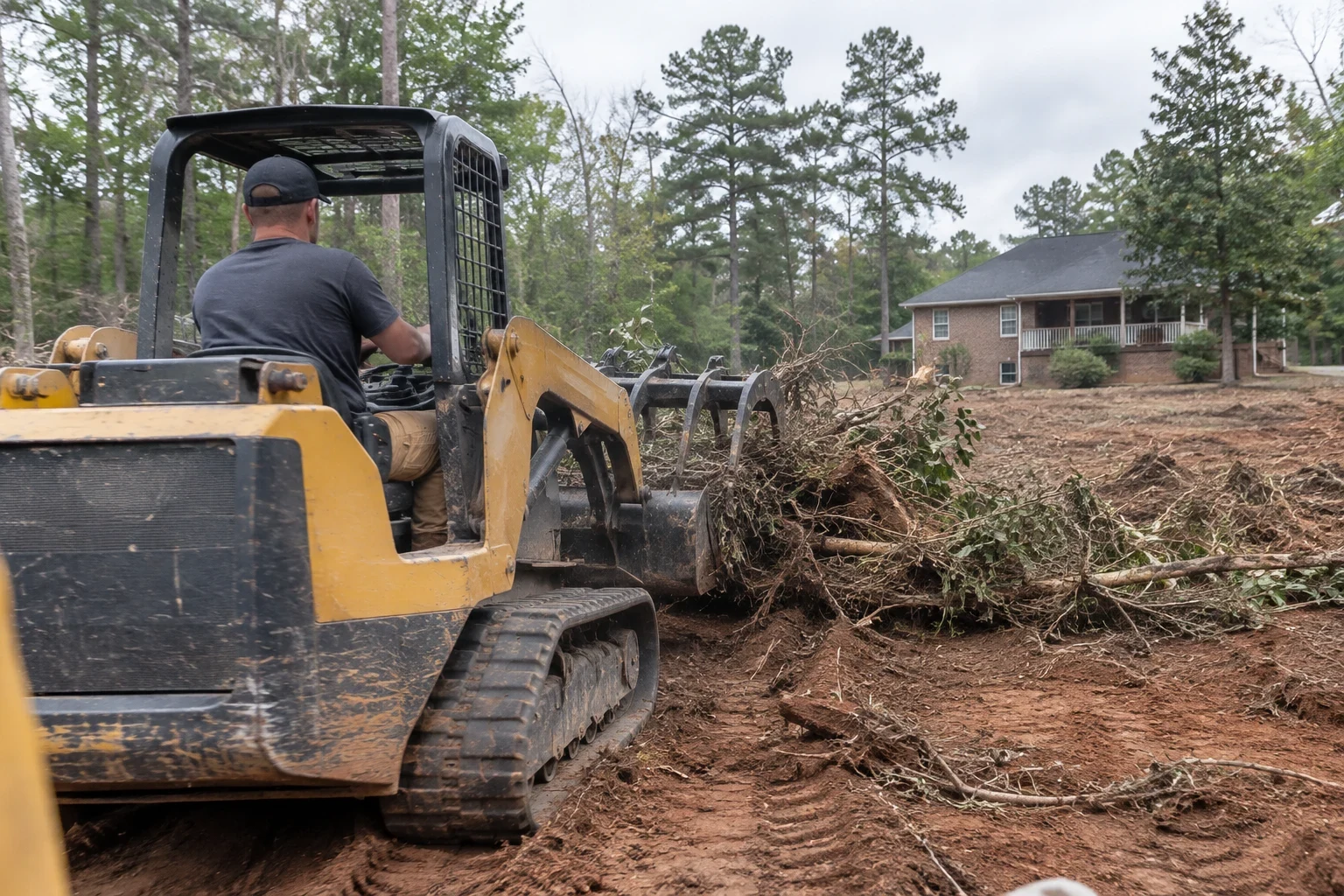
Clearing that serves the build, not just the view
Land clearing is the first physical step on a new lot, and it decides a lot about what comes after. If stumps and root mats stay in the ground under a slab or footing, they rot over the next several years. The voids they leave let soil drop, and that shows up as cracked slabs, sticking doors and sloped floors. Our clearing takes out what has to go down to mineral soil inside the building footprint, the driveway path and the septic or utility runs.
We clear the way we would want a neighbor to clear the lot next to ours. We save healthy hardwoods outside the work zone, protect their root zones from equipment traffic, and leave a clean site instead of windrows of debris. Because we also handle grading and foundation work, the clearing is laid out to match the floor plan and drainage plan from day one.
What our land clearing covers
Clearing limits and trees to keep
We walk the property with you and tie ribbon on every tree you want to keep, then set stakes where the clearing ends. Any tree leaning toward the house site gets pointed out on that same walk. Around each saved tree we mark a protection line near the drip edge, so equipment stays off its roots.
Tree felling and removal
Each tree is dropped in a planned direction and cut into lengths we can handle. The wood is hauled away, or usable logs are stacked wherever you ask.
Stump and root extraction
Within the footprint we pull stumps whole, with the main roots still attached, instead of grinding them flush. Ground-down stumps leave buried wood that rots and sinks. That can work at the edge of a lawn, but not under concrete.
Clearing the understory
Thickets of privet and briar, climbing vines and young saplings come down next. We either load that material out or run it through a mulcher. Any mulch left on the lot is spread away from spots that will be built on or compacted.
Erosion control
Bare Upstate clay washes fast in a summer thunderstorm. Before heavy work begins, silt fence or another sediment barrier goes in along the low side, and it stays until grading and stabilization take over.
Rough cleanup for the next trade
The cleared area is left without stumps, root balls or debris piles, so the grading crew or a surveyor staking corners can start right away.
Signs your lot needs clearing before anything else
You cannot see the corner pins
If the surveyor or septic designer cannot walk the lot, clearing has to come first. Brush-cutting a path and the footprint lets them do their work accurately.
Trees stand where the house will go
Any tree within the footprint, or close enough that its roots run under the foundation, needs to come out with its root ball.
Old stumps from past logging
Many rural lots were timbered years ago. Those buried stumps are half-rotted now and will keep settling, so they are pulled and the holes filled with compacted soil.
Overgrown driveway route
Concrete trucks, lumber deliveries and the framing crew need a firm, cleared path. A driveway cut through young pines and brush is often the first thing we open up.
Dead or leaning trees near the building site
A dead oak or a pine leaning toward the planned roofline is a risk once a house is standing. Taking it out now, with open access, is simpler than later.
How a clearing job runs
- 1
Phone consultation, then the lot
It begins with a call where you tell us about the property and what you want to build. After that we come out to see it, checking slope, the size and species of the trees, any wet spots and how equipment will get in.
- 2
Layout and permits
We stake the footprint and clearing limits from your plan or survey and confirm which county and state rules apply. Larger disturbed areas can trigger stormwater requirements, and outdoor burning in South Carolina requires notifying the Forestry Commission, so we sort that out before work starts.
- 3
Felling and extraction
Erosion barriers go in first. Then trees come down, stumps and roots are pulled from the build zone, and brush is ground or loaded out. We fill stump holes in lifts and compact them rather than leaving loose soil.
- 4
Final walk and handoff
We walk the cleared lot with you, confirm the saved trees are untouched and talk through the next step. Usually that is grading, followed by foundation work.
What moves the cost of land clearing
Clearing is priced from what is actually standing on the lot, so we quote it after we have seen the ground in person. Your quote is broken down by task, so you can see what goes to felling, stump work and hauling. We do not guess at a number from an aerial photo.
- Acreage and tree density
- Thinly spaced pines on half an acre take far less time than an acre packed with mature oaks and hickories. Trunk diameter counts for more than the number of trees, because large hardwoods are slower to fell and their stumps weigh much more to pull.
- Slope and access
- Steep ground, a narrow road frontage or soft soil after rain limits what equipment can reach the work. That adds machine hours.
- Debris disposal
- Hauling everything off costs more than grinding brush into mulch on site. Where burning is allowed, it is another option, depending on rules and season.
- How much is cleared to soil
- Full stump and root removal is needed only where you will build or pave. Keeping the rest selectively cleared lowers cost and keeps shade.
Land clearing questions
Something not covered here? (864) 532-5522
Can you save specific trees near the house?
In most cases, yes. We fence off the root zone, because compacted soil and torn roots kill a tree slowly, often a few years after the house is finished. When a tree sits so close to the footprint that digging for the foundation would cut too many of its roots, we say so up front, before any equipment arrives.
Why not just grind the stumps?
Grinding removes the stump only a few inches below grade and leaves the root mass in the ground. Under a lawn that is fine. Under a slab, driveway or footing, that wood decays and the soil settles into the voids, so we extract stumps in any area that will carry weight.
Do you carry insurance for this kind of work?
Yes. We are licensed and insured in NC and SC. That coverage matters on clearing jobs, where heavy equipment is working and large trees are coming down.
Is your clearing work covered by a warranty?
Our workmanship carries a 1-year warranty. If a filled stump hole in the build area settles within that year, let us know and we will come back and correct it.
Do you clear lots outside Norris?
Yes. We regularly work in Central, Liberty, Pickens, Easley and Clemson, and on lake lots around Keowee Key. Access on steep lake frontage is something we look at closely during the site visit.
How soon after clearing can grading start?
Often right away, since we handle grading ourselves and plan both together. Heavy rain can push it back a few days so the clay can dry enough to cut and compact properly.
Start with a walk of your lot
Tell us where your lot is and what you plan to build. We will talk through clearing limits, trees worth keeping and how the job fits with grading and the foundation.