ServicesFlooring Installation
Flooring Installation in Norris, SC
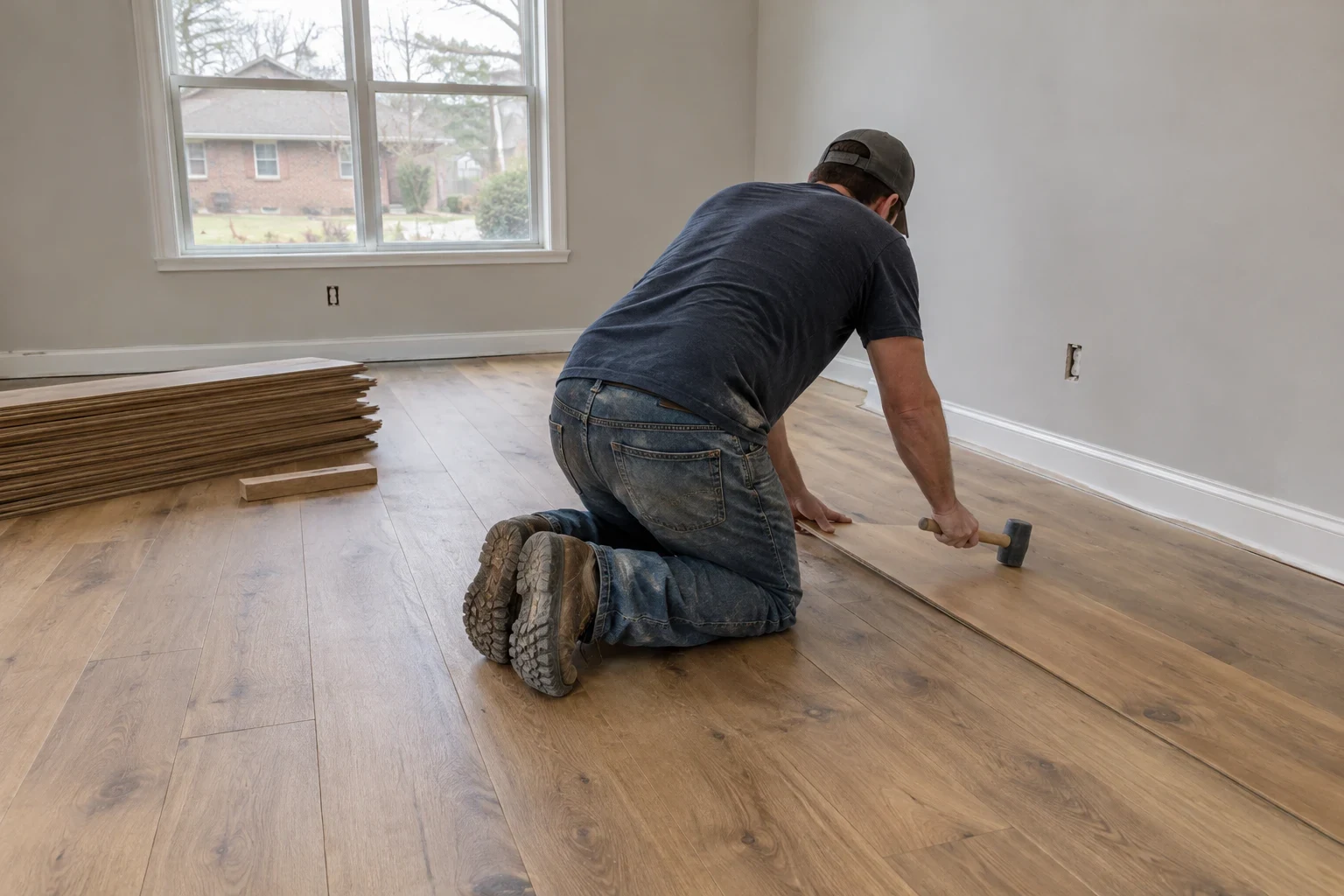
Our crews lay solid hardwood, engineered wood, luxury vinyl plank and tile, but each job begins with the subfloor. We take moisture readings, check flatness and re-secure loose panels first, so the finished floor stays level, tight and quiet long after we pack up.
Why we start below the finish floor
When a new floor fails, the product is rarely the culprit. Hardwood that cups typically has moisture rising into it from a crawlspace or slab. Grout that keeps cracking usually sits on a subfloor that bends between joists. Click-lock vinyl plank that gaps or peaks was often installed without room to expand, or across a low spot it could not span.
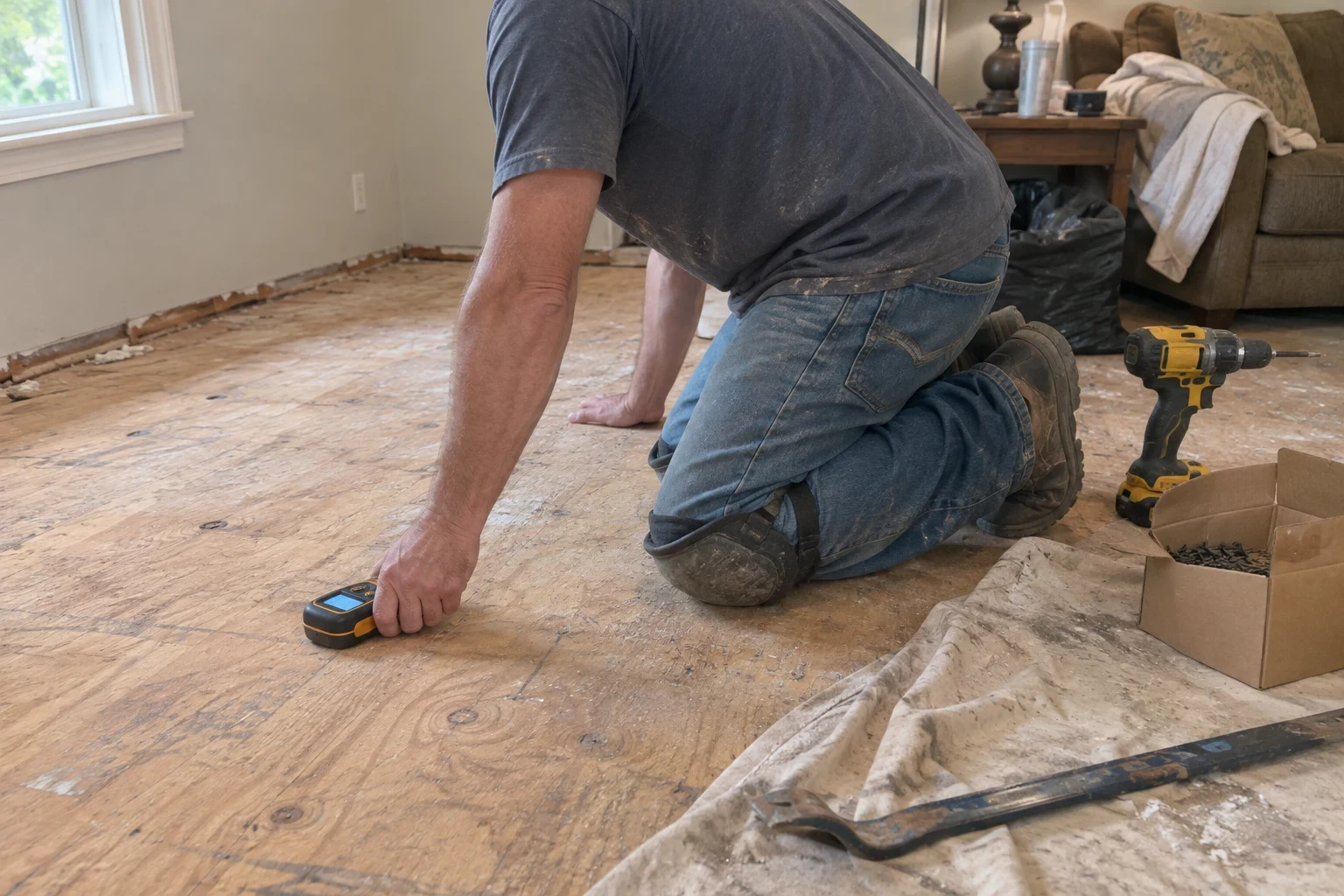
That is why our flooring installation starts with the structure underneath. We take moisture readings in the subfloor or slab, measure flatness against the tolerance your chosen product allows, and fix squeaks and soft areas while everything is exposed. The finish floor then goes down to the manufacturer's instructions, which is also what keeps the product warranty intact.
We handle flooring in the custom homes we build and in existing houses around Norris, Central and Pickens. Inside your home we work the way we would for a neighbor: furniture moved carefully, dust held to the work area, and a straight answer if the old floor turns out to be hiding damage.
What comes with our flooring installation
- 01
Tear-out of the existing floor
We take up the old carpet and its padding, the nailed strips along the walls, and any worn sheet vinyl or tile, then load it all out for disposal. Leftover staples and ridges of old adhesive get scraped off, because they show through thinner flooring.
- 02
Subfloor repair and prep
Loose plywood or OSB gets screwed down to stop squeaks, and water-damaged sections are cut out and replaced. We grind down high spots and fill low ones with leveling compound. Where tile is going in, we add cement backer board or an uncoupling membrane as the floor requires.
- 03
Moisture readings
Wood subfloors are metered and concrete slabs are tested before any wood or wood-based product goes down. High numbers get an explanation of the likely source and the vapor retarder or underlayment that suits it.
- 04
Installation matched to the product
Solid hardwood is nailed after it has acclimated in the house. Engineered wood can be glued, nailed or floated. Luxury vinyl plank floats with the right gap at every wall, and tile is set in thinset with full mortar coverage.
- 05
Trim and transitions
Baseboard and shoe molding are reset or replaced. We undercut door casings so the new floor tucks under them and fit transition strips where it meets a different surface.
- 06
Cleanup and walkthrough
We vacuum and wipe everything down, then walk the floor with you and hand over care instructions for your product.
Questions about Flooring Installation?
Call(864) 532-5522Signs it is time for new floors
Cupping or crowning boards
Edges higher than centers, or the reverse, point to moisture imbalance. Humid summers make this common over damp crawlspaces, and replacing the boards without fixing the source only repeats it.
Squeaks and soft spots
Squeaks come from subfloor panels rubbing on nails that have backed out. A soft spot can mean rot near a tub, toilet or exterior door, and it should be opened up.
Cracked tile or grout
Repeated cracks along one line usually mean the floor deflects too much under load. The fix is stiffening the subfloor, not just new tile.
Worn finish you cannot sand again
Solid hardwood can be refinished several times, but engineered wood with a thin wear layer often cannot. Once the veneer is gone, replacement is the honest answer.
Planning a remodel
If walls or cabinets are changing, flooring belongs in the same plan. We coordinate it with our home remodeling work so the floor runs continuously instead of patched around old footprints.
How a flooring job runs
- 1
Consultation and measuring
We talk through how each room is used, measure, and check the subfloor, moisture and door clearances. You get a written estimate broken out by line item.
- 2
Material delivery and acclimation
Wood products sit in the conditioned house for the time the manufacturer specifies, so they reach the same moisture level as your rooms before installation.
- 3
Demo and subfloor prep
We protect adjacent rooms, remove the old floor and correct the subfloor. If we find rot or a framing issue, we show you photos and explain the options before going further.
- 4
Installation and trim
We lay the floor, maintain expansion gaps at walls, then reinstall trim and transitions. Tile gets grouted after the thinset cures.
- 5
Final walkthrough
We check for lippage, gaps and loose boards with you, then clean up. Our workmanship carries a 1-year warranty.
What moves the price of a flooring job
The condition of the house usually matters more than people expect. Square footage and the product you pick set the starting point, and the prep work underneath shifts it from there. Every line on our written estimate gets explained, so the total does not change on you halfway through.
- The product you choose
- Luxury vinyl plank, engineered wood, solid hardwood and tile carry different material costs and different labor. Tile and nail-down hardwood take the most hours per square foot.
- What the subfloor needs
- A dry, flat, tightly fastened subfloor needs very little. Leveling compound, replacing damaged panels or stiffening the floor for tile each add labor and material.
- Tear-out and disposal
- Pulling up carpet is fast work. Sheet goods glued to the subfloor, ceramic set in an old mortar bed, or two or three layers stacked on each other take far longer to break loose and haul off.
- Room shape and pattern
- Open, square rooms go down efficiently. Stairs, angled walls, herringbone layouts and a lot of doorways mean more cuts, more waste and more time.
Questions about flooring installation
Can the new floor go right over the one I have now?
In some rooms, yes. Luxury vinyl plank can float over tile or sheet vinyl that is flat and firmly bonded, which skips the tear-out. We will not lay over carpet or over anything loose or wavy, and we check how the extra height affects doors and appliances.
Why does hardwood have to sit in the house before you lay it?
Wood takes on and gives up moisture with the humidity around it. Giving the boards time in your conditioned rooms means fewer winter gaps and less summer cupping. Before installation day, we meter the boards and the subfloor beneath them to confirm they are close enough to proceed.
Does luxury vinyl plank work on a concrete slab or in a basement?
Usually it does, because moisture does not ruin it the way it ruins wood. The slab still gets tested first. If readings come back high, a vapor barrier goes down under the planks so mold has no place to start.
How much of my furniture do I need to move?
Pack up breakables, small items and the contents of closets in the work area. We can shift the larger pieces, and during the consultation we will agree on where everything sits while we work.
What protection do I have if something goes wrong with the install?
We are licensed and insured in NC and SC, which covers flooring work in your home here. Our workmanship is backed by a 1-year warranty, and the flooring product carries its own manufacturer's warranty on top of that.
Ready to plan your new floors
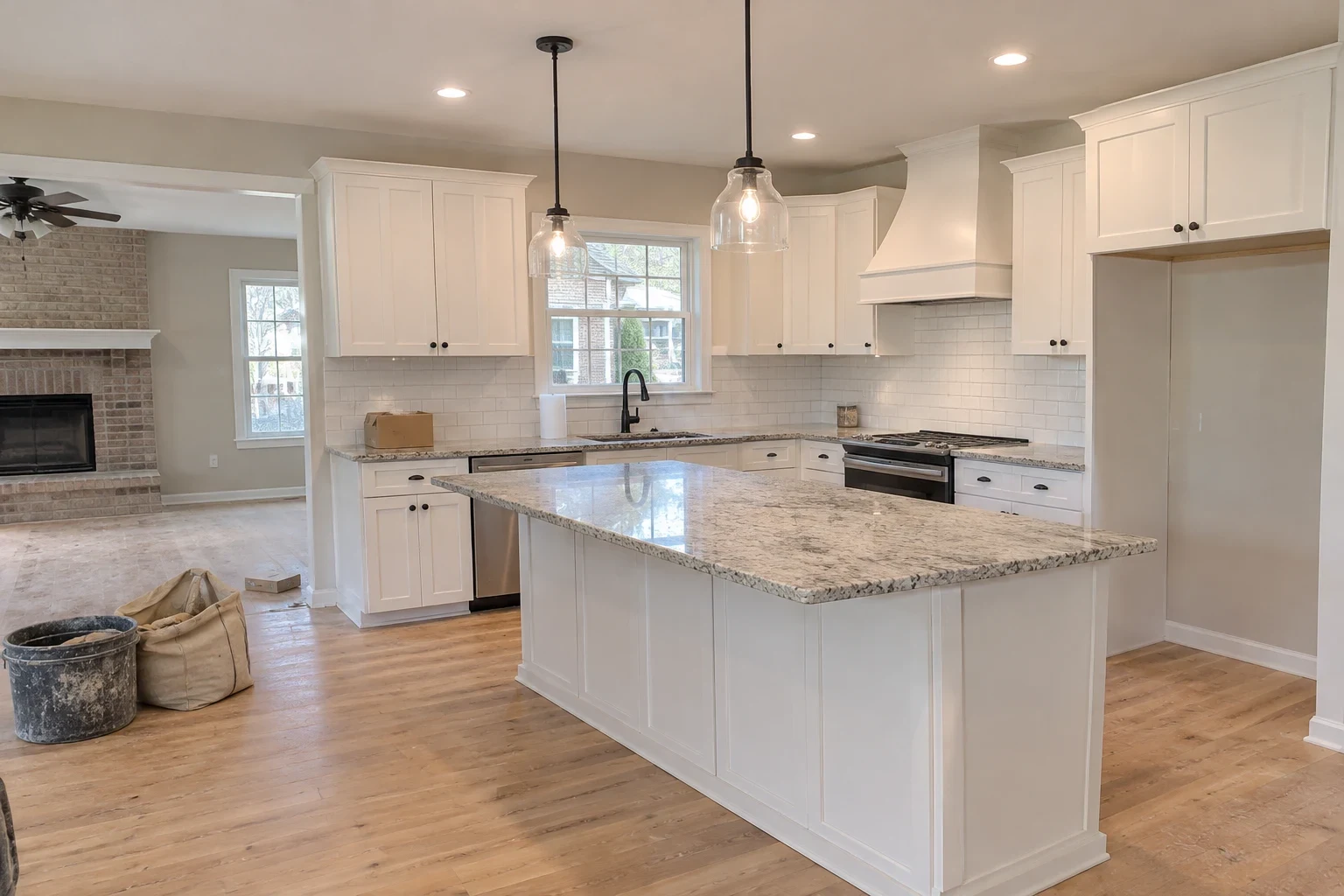
Tell us which rooms, what is down now and what you have in mind. We will talk through materials, subfloor prep and what the job involves, whether you live in Norris, Easley or Seneca.