ServicesGrading
Grading in Norris, SC
We shape your lot so the foundation sits on firm, compacted soil and rainwater runs away from the house instead of toward it. That covers rough grading for a new build, finish grading before sod or seed, and regrading around existing homes with drainage trouble.
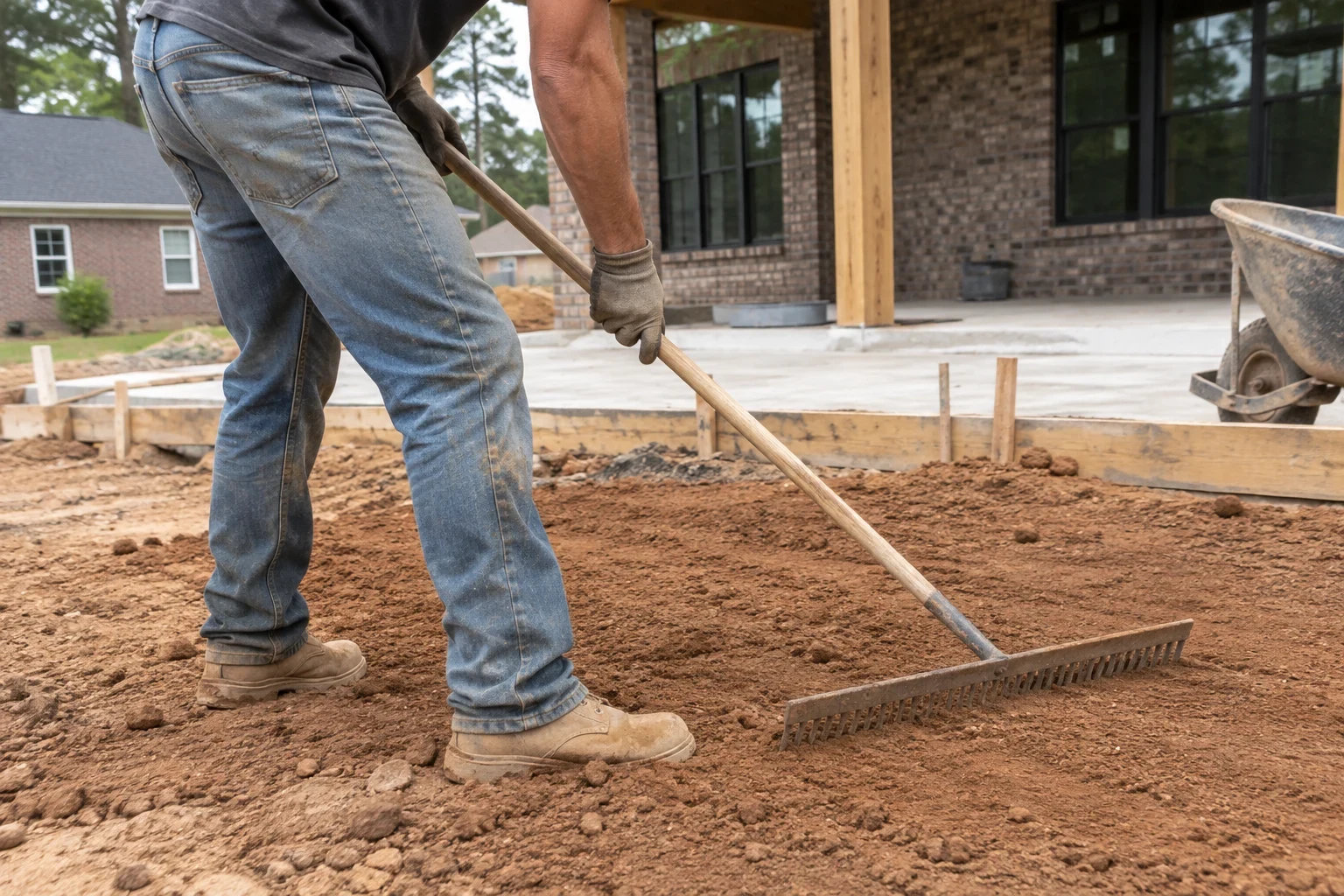
What grading does for a house
Grading is moving and compacting soil to set the elevations a building needs. For a new custom home, that means a level building pad, a driveway subgrade that will not rut, and a yard that falls away from the foundation on every side. For an older home, it usually means fixing a slope that has settled back toward the walls over the years.
Most of our grading follows land clearing on a wooded lot and comes before foundation work. Getting it right at this stage is cheap compared with chasing a wet crawlspace or a cracked slab later. Upstate clay holds water and turns slick when wet, so we pay close attention to compaction and where the runoff ends up.
We are licensed in South Carolina, and we treat your lot the way we would want a neighbor to treat ours: we walk it with you, explain what the soil and slopes are telling us, and tell you plainly if the job is smaller than you expected.
What our grading work includes
Rough grading and cut-and-fill
We cut high spots and fill low ones to reach the elevations on your site plan. Excess topsoil is stockpiled for reuse rather than buried under the pad.
Building pad preparation
Fill under the house is placed in thin lifts and compacted one layer at a time. Dumping a deep load of loose soil and running over it once leaves voids that settle under the footings later.
Positive drainage around the foundation
We set the ground to fall away from the walls, generally about six inches over the first ten feet where the lot allows, which is the standard residential codes point to. Where a neighboring slope pushes water toward the house, we add a swale to carry it around.
Driveway and walkway subgrade
A driveway is only as good as the base under it. We shape and compact the subgrade with a slight crown or cross slope so water leaves the surface instead of soaking in.
Finish grading
Once construction traffic is done, we rake out ruts, spread the saved topsoil and set final contours so the yard is ready for seed, sod or landscaping.
Erosion control while soil is bare
Silt fence and other measures keep sediment on your lot and out of ditches and the neighbors' yards until grass takes hold.
Signs your lot needs grading
Standing water near the walls
Puddles that sit against the foundation after a storm mean the ground slopes the wrong way. That water soaks down beside the footings and finds its way into crawlspaces and basements.
Damp crawlspace or musty smell
Moisture under the house often starts with surface water, not plumbing. Correcting the slope outside is usually the first fix to try before anything more involved.
Washouts and gullies
Channels cut into the yard or driveway edge show where concentrated runoff is moving soil. Left alone, they get deeper every heavy rain.
A cleared lot ready to build
After clearing, the site needs a pad and drainage plan before foundation work can start. Skipping this step pushes the problem onto the foundation crew.
Soil settled against the house
Backfill around older homes often sinks over time, leaving a low ring that traps water right where you do not want it.
How a grading job runs
- 1
Consultation and site walk
We look at the existing slopes, where water enters and leaves the lot, soil conditions and access for equipment. You tell us what you plan to build or what problem you are seeing.
- 2
Plan and written estimate
We mark target elevations and drainage paths and give you a line-item estimate for cut, fill, compaction and finish work. If the site needs a permit or erosion control plan, we explain that up front.
- 3
Rough grade and compaction
Equipment shapes the pad, driveway and swales. Fill goes in lifts and is compacted, and we check grades with a laser level rather than by eye.
- 4
Final grade and cleanup
We set finished contours, spread topsoil, leave erosion control in place where needed and clean mud off the road and driveway apron before we leave.
What moves the cost of grading
Grading is priced by the work the dirt actually needs, not by the square footage of the house. Two lots the same size can differ a lot depending on slope and soil. We walk the site before giving you a number so the estimate reflects what is really there.
- How much soil moves
- A gently sloped lot may only need trimming, while a hillside pad can require significant cut and fill. Importing fill dirt or hauling off excess adds trucking cost.
- Soil type and moisture
- Red clay compacts well at the right moisture but turns to slick mud when wet. Wet weather can mean waiting for the ground to dry or adding stone to stabilize soft spots.
- Access and space
- Tight lots, steep driveways or existing landscaping slow equipment down and may call for smaller machines.
- Drainage features
- Swales, culverts under a driveway or rock-lined channels for heavy runoff add materials and labor beyond basic shaping.
- Permits and erosion control
- Larger disturbed areas can require stormwater permits and inspected erosion measures, which add paperwork and materials.
Grading questions we hear
Something not covered here? (864) 532-5522
Do I need grading if my lot already looks fairly flat?
Often yes, though usually less of it. A lot that looks flat still needs a defined slope away from the house and a compacted pad under the foundation. We will tell you plainly if light shaping is all it takes.
Can you fix drainage around a house that is already built?
Yes. We regrade the soil around the foundation so it falls away from the walls, and we add swales where runoff comes from uphill. The finished grade stays below the siding and weep areas so the fix does not start a new moisture problem.
How long does grading take?
A residential pad or regrading job usually takes a few days of equipment time, depending on how much soil moves. Rain is the biggest variable. Working saturated clay ruins compaction, so we schedule around wet stretches instead of pushing through them.
Will the equipment tear up the rest of my yard?
We plan the access route during the site walk and keep machines on that path as much as the job allows. Where a lawn, septic field or tree roots sit near the work, we mark them and work around them. Any ruts left by our equipment are smoothed out during finish grading.
What if a slope or swale you graded does not hold up?
Our grading comes with a 1-year warranty on workmanship. If a slope we set starts sending water the wrong way or compacted fill settles during that first year, call us and we will come out, look at the cause and talk through the repair with you.
Do you handle the clearing and foundation too?
We do. Many owners have us handle land clearing, grading and foundation work in sequence, which keeps one crew accountable for elevations from the first tree to the first course of block.
Get your lot set up to drain right
Tell us about your site or the water problem you are seeing. We will walk the lot, explain what the slopes need and give you a written estimate.